
APOGEE /ˈapəjē/
The highest point in the development of something.
Apogee Fredericksburg is K-12 academy located on 24 acres of forestland that integrates elements of nature-school, business school, and leadership academies to develop self-reliant young men and women prepared for a life of meaning and purpose.

Our approach combines spiritual, physical, and character formation with learning how to learn and grit in a natural environment that rewards initiative, discipline, and integrity.
Every child progresses at their own pace toward excellence; spiritually grounded, intellectually sharp, physically capable, and deeply connected to the natural world that allows them to foster their purpose and unique identity.
CORE VALUES
Faithfulness
Purpose
Wisdom
Character
Fitness & Health
Discipline
Grit
Discernment
Creativity
Compassion
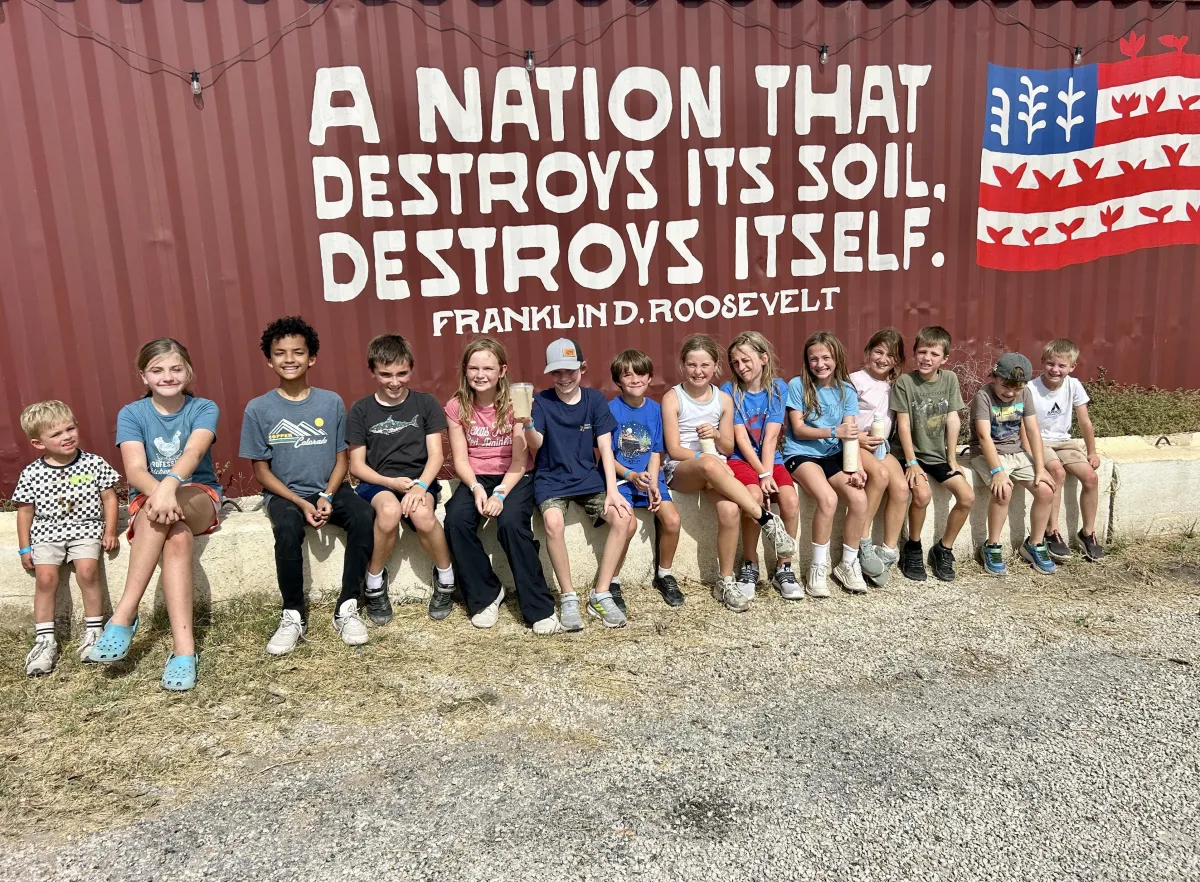
Stewardship
Courage
CONNECT WITH US TODAY!
THE PHILOSOPHY
GET INSPIRED
“It is hard to fail, but it is worse never to
have tried to succeed.”
–Theodore Roosevelt-

Our Strategy
Integrated Faith and Purpose
Faith is incorporated into learning through Scripture study, moral reasoning, and guided reflection. Students learn to view their work, service, and study as expressions of gratitude and obedience to a higher calling.
Character Training Through Daily Practice
Character is developed through consistent expectations and reflection. Daily accountability, journaling, and team duties reinforce honesty, punctuality, and personal ownership. Mistakes are treated as data for growth. Neither success nor failure is permanent.
Clear Routines and Expectations
Days follow a predictable rhythm of morning briefings, focused work blocks, physical challenge, and end-of-day reflection. Structure reinforces focus, productivity, and respect for time.
Time in Nature and Unstructured Play
Students spend meaningful time outdoors in both guided and free exploration. Nature-based learning builds curiosity, problem-solving, and independence. Unstructured play allows imagination, risk-taking, and social skills to develop naturally — reinforcing balance, adaptability, and joy. The outdoors functions as an essential environment for physical, emotional, and spiritual growth.
Structured Physical Conditioning
Students train their bodies consistently through daily workouts, outdoor activities, and skill development. Physical training builds endurance, discipline, and confidence. The expectation is steady improvement, not comparison.
Focused Reading and Critical Thinking
Comprehension and reasoning are practiced daily. Learners read diverse texts, annotate for meaning, and defend ideas through Socratic dialogue and debate. Instruction emphasizes logic, inference, and discernment—building the ability to analyze information and form grounded conclusions.
Practical Creativity and Innovation
Every creative exercise has a deliverable. Students design, prototype, and refine tangible outcomes—art, inventions, or business concepts—that are reviewed and improved through feedback.
Stewardship and Community Responsibility
Students take responsibility for shared spaces, mixed age groups, and collaborative projects. Each student has defined campus duties and participates in service initiatives that strengthen community ownership and gratitude.
Experience-Based Learning
We learn by doing. Academic subjects connect directly to projects, problem-solving, and real-world applications. Learners design products, run businesses, construct models, and complete service challenges that require planning, teamwork, and measurable results.
Self-Paced and Individualized Academics
Students advance at their own pace to ensure mastery. Core academics are delivered through clear benchmarks and adaptive lessons, allowing acceleration or additional practice as needed. Skills are self-taught when applicable, and coaches tutor socratically when needed. Learning to learn is the primary goal, and is not to be bypassed for the sake of expediency. Coaches and parents track progress weekly, and adjust workload and goals to match each learner’s pace, which are personalized to highlight individual gifts.
Mentorship and Peer Leadership
Students learn leadership by practice. Older or more advanced learners mentor younger ones, model standards, and help uphold culture. Adults coach rather than lecture, focusing on accountability and growth.